AGP Executive Report
Last update: 4 days agoIn the last 12 hours, coverage has been dominated by the 48th ASEAN Summit in Cebu and the regional fallout from the Middle East conflict. Multiple reports frame the summit as a “bare bones” agenda focused on economic issues—especially energy and food security—while also touching maritime security and the ASEAN Charter process. ASEAN foreign ministers met in Cebu to discuss how to respond “with agility” to disruptions affecting energy flows, trade routes, and food supply chains, and there is also reporting that a contingency plan and maritime-related items (including the Code of Conduct track) are expected to feature in summit discussions.
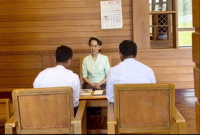
Myanmar-related diplomacy and access remain a key thread. ASEAN officials say the bloc is still not ready to accept Myanmar’s political leaders attending summits and official meetings, while engagement continues through open communication channels. At the same time, Reuters reports ASEAN foreign ministers agreed to hold a virtual meeting with Myanmar’s foreign minister “in the very near future,” as Myanmar seeks to re-engage after years on the sidelines; the same reporting notes ASEAN wants progress on de-escalation, dialogue, and humanitarian access. Separately, the Philippines has requested “brief access” for Aung San Suu Kyi after her transfer to house arrest, and ASEAN is also expected to welcome the release of more than 4,000 prisoners, including Win Myint, as part of a reconciliation-oriented step.
Security and humanitarian concerns in and around Myanmar also feature prominently in the most recent reporting. In India’s Manipur, multiple articles describe suspected cross-border attacks on Tangkhul Naga villages in Kamjong district near the Myanmar border, with allegations of militants linked to Kuki National Army-Burma and People’s Defence Force, and reports of houses burned and civilians injured or missing. Civil society groups (COCOMI and Tangkhul Naga Long) characterize the incidents as “external aggression” and demand a “national response,” while local officials also call for stronger border security and traceability of abducted residents. In parallel, ASEAN-adjacent crime and trafficking coverage includes a CBI operation described as busting a “cyber slavery” trafficking network sending Indians to scam compounds in Myanmar and Cambodia, with victims allegedly facing passport confiscation and abuse.
Beyond ASEAN, the last 12 hours also include targeted enforcement and public-health items. An INTERPOL-coordinated operation (Pangea XVIII) reports large seizures of unapproved/counterfeit pharmaceuticals and arrests across many countries, while Singapore’s FATF assessment is reported as placing it on “regular follow-up” with noted room for improvement in anti–money laundering and counter-terrorist financing measures. There is also reporting on Sri Lanka’s parliamentary warning that it is becoming a “safe haven” for cybercriminals, alongside allegations of visa misuse and fraudulent company registrations—though this appears more like political/cybercrime scrutiny than a single confirmed regional policy shift.
Older coverage from the prior days provides continuity mainly on ASEAN’s Myanmar approach and the summit’s broader economic framing. Earlier reports emphasize that ASEAN has not reached consensus on recognizing Myanmar’s election results and continues to review the situation under the Five-Point Consensus, while summit preparations repeatedly highlight energy and food security pressures tied to the Middle East crisis. However, the most recent 12-hour evidence is richer on summit process and immediate Myanmar engagement steps, while older material is comparatively more background on policy positions rather than new developments.
Note: AI summary from news headlines; neutral sources weighted more to help reduce bias in the result.